Germany Minimum Wage 2026: How Much You Really Earn After Tax
Minimum Wage in Germany 2026: How Much Do Workers Actually Earn and What Taxes Must Be Paid?
In 2026, Germany continues to be one of the most attractive labor markets for Vietnamese workers thanks to its high income and comprehensive welfare system. However, besides salary levels, taxes and mandatory insurance contributions are important factors that directly affect net income.
This article will help you clearly understand the minimum wage in Germany in 2026, how net salary is calculated, and the mandatory costs when working in this country.
What is the minimum wage in Germany in 2026?
According to German government regulations, the minimum wage is periodically adjusted to ensure a reasonable standard of living for workers amid rising living costs.
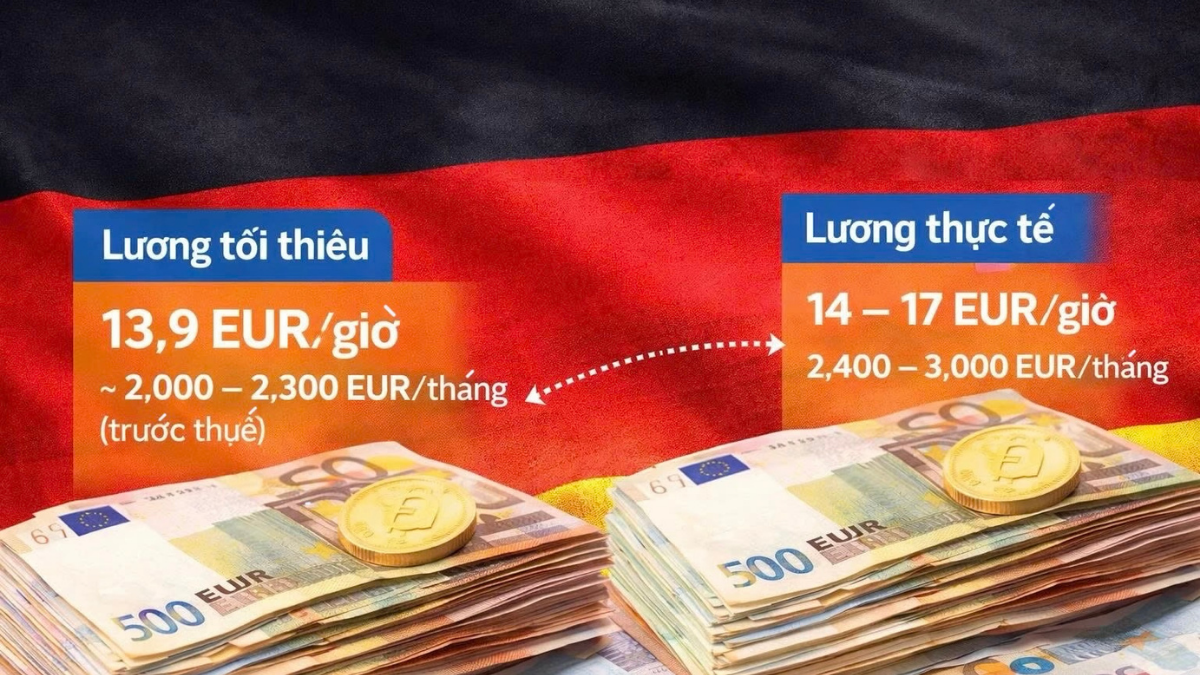
- 13.9 EUR/hour
- Equivalent to approximately 2,000 – 2,300 EUR/month (before tax)
In reality, many industries facing labor shortages such as factories, food processing, hospitality, or chefs offer higher wages, ranging from 14 – 17 EUR/hour.
This means that gross income can reach 2,400 – 3,000 EUR/month depending on the job position and working hours.
How much is the net salary in Germany?
The salary workers receive after taxes and insurance (net) is usually significantly lower than the contractual salary (gross).
- Gross salary: 2,200 EUR
- Net salary: 1,500 – 1,700 EUR
If the salary is higher, around 2,800 EUR/month, the net income may reach approximately 1,800 – 2,100 EUR.
Mandatory taxes and insurance in Germany
Income tax
Income tax in Germany follows a progressive tax system, ranging from 14% to 42% depending on income level.
Health insurance
- Contribution rate: 14% – 15%
- Shared equally between employee and employer
Pension insurance
- Contribution rate: 18.6%
Unemployment insurance
- Contribution rate: 2.6%
Long-term care insurance
- Contribution rate: 3% – 3.4%
Total deductions when working in Germany
- 25% – 35% of total income
This is a common deduction level and explains why net income is lower than the salary stated in the contract.

Benefits of paying taxes and insurance in Germany
- High-quality healthcare services
- Pension benefits after working years
- Unemployment benefits when losing a job
- Opportunities for long-term residence and family reunification
Conclusion
The minimum wage in Germany in 2026 remains among the highest in Europe. After taxes and insurance, workers can still save around 800 – 1,200 EUR/month with proper financial planning.
Understanding the salary structure and tax system not only helps workers prepare better but also supports making informed decisions when choosing to work in Germany.
Contact us now for detailed consultation on working in Germany and long-term settlement opportunities.
-
Chia sẻ:
-

-

-

-

DANH MỤC
Bài viết mới nhất

Pacific – Hành trình 10 năm kết nối cơ hội việc làm quốc tế cho người lao động Việt Nam

Phỏng vấn tháng 06/2026 – Westfleisch Đức tuyển nhân viên chế biến thực phẩm lương đến 17.99 Euro/giờ

Cơ hội và Thách thức khi đi làm tại Đức theo diện Visa 18B: Một Góc Nhìn từ Lao Động Trái Ngành

Đức mở rộng chương trình tiếp nhận lao động thời vụ 8 tháng: Cơ hội mới hấp dẫn cho lao động Việt Nam

Westfleisch Đức Tuyển Nhân Viên Chế Biến Thực Phẩm - Phỏng vấn tháng 4

Lương tối thiểu Đức 2026: Thực nhận bao nhiêu sau thuế? Chi tiết các khoản phải đóng
TAGS NHANH